
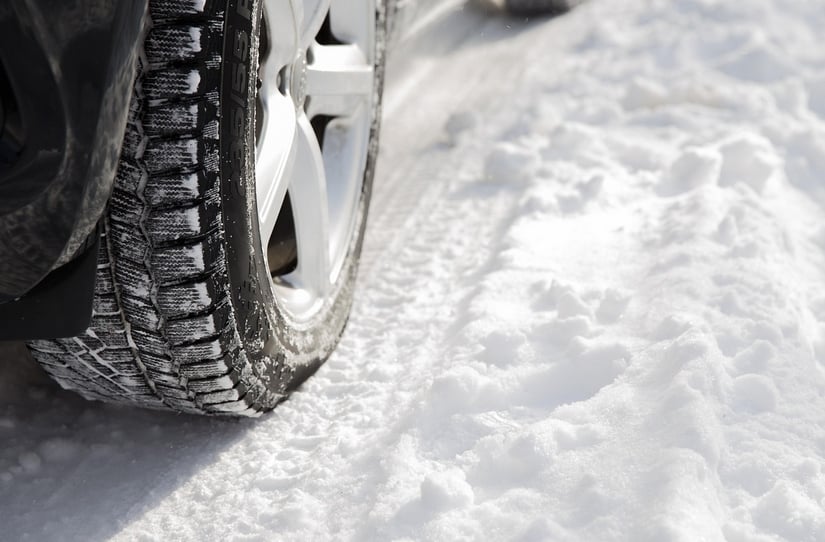

BC Highway Patrol and Road Safety at Work recently conducted a winter tire enforcement event on the Sea to Sky Highway, resulting in 15 tickets and several vehicle tows.
Don’t try coming up the Sea to Sky Highway without appropriate tires, say law enforcement officials.
On Nov. 24, Road Safety at Work and the RCMP’s BC Highway Patrol teamed up for their annual winter tire enforcement event on the Sea to Sky Highway near Britannia Beach.
In 2025, an average of close to 13,000 vehicles travelled the Sea to Sky Highway daily, according to provincial stats. (About 16,000 per day in the summer.)
Officers checked vehicles to ensure they had legally required winter tires with at least 3.5 mm of tread depth and were in good condition.
All told, 238 vehicles were checked, with 15 tickets issued. Eight verbal warnings were given, and four vehicles towed for various reasons including the condition of their tires, not having insurance, or not having a valid driver’s licence. Five vehicles were turned around, unable to continue on their trip due to their tires.
“Many drivers associate winter tires with snow and ice but cold temperatures alone can affect how well your tires grip the road,” said Trace Acres, spokesperson for Road Safety at Work’s Winter Driving Safety campaign, in a news release. “Even when the pavement is bare, the right tires can help you maintain control and stop safely.”
On the Sea to Sky Highway, drivers can leave the mild conditions of the Lower Mainland and encounter frost, snow, or ice farther north or at higher elevations, the release adds.
Not all tires work the same. Even those that meet B.C.’s winter requirements on designated highways don’t provide the same level of traction.
Road Safety at Work advises drivers to use tires bearing the three-peaked mountain and snowflake symbol.
They retain their flexibility and provide better grip when temperatures drop below 7C, the release states.
Tires marked only M+S (mud and snow) meet the minimum legal requirements but generally provide less grip in cold conditions.
Whichever tires are used, all four should be the same type and size, with matching tread patterns.
“Winter tires are an investment in safety, not just a way to meet the law,” Acres added. “But even the best tires can’t make up for driving too fast for the conditions.”
Drivers should leave at least four seconds of following distance between vehicles to have time to react and stop.
Road Safety at Work also suggests drivers postpone non-essential trips when weather conditions are poor.
If you have to travel, check road conditions at DriveBC.ca before leaving and monitor the weather and conditions.
WorkSafeBC statistics show that time-loss injury claims from work-related vehicle incidents are about 11.5 per cent higher during winter months compared with the rest of the year, the release states.
Drivers without legally required winter tires on Highway 99 and other designated highways around B.C. from now through spring can be fined $121 and may be turned back by RCMP.
Road Safety at Work’s annual Winter Driving Safety campaign is funded by WorkSafeBC, ICBC, and the Ministry of Transportation and Transit, and supported by the Road Safety at Work Alliance.
source: Richmond News photo: Pixabay