
A warmer than normal fall is in the forecast for Western Canada, with the potential for effects that stretch well beyond the thermometer.
The developing El Niño could also influence how much snow accumulates in B.C.’s mountains and how much water is available in the months ahead.
Marko Markovic, a physical scientist with Environment and Climate Change Canada, says the agency’s seasonal forecast is pointing toward an unusually strong event.
Sea surface temperatures in the central Pacific are forecast to be more than 3 C warmer than normal. That is an exceptionally large departure from the historical average for the region.
“This event will be very strong. One of the strongest ever recorded,” Markovic said.
El Niño occurs when ocean temperatures in the equatorial Pacific become unusually warm, affecting atmospheric circulation and weather patterns around the world.
“For the West, El Niño has a significant impact on climate patterns,” Markovic said. “In B.C., temperatures tend to be warmer than normal, and the weather conditions tend to be drier than normal.”
But a strong El Niño does not guarantee extreme conditions in Canada.
“Super El Niño does not necessarily mean it will have a huge impact on Canada,” Markovic said. “It might, but it might not.”
Environment and Climate Change Canada’s current forecast has greater confidence for the fall than the winter, with Markovic saying forecasters should have a clearer picture of the coming winter by December.
“The winter season is very far from today,” he said. “So there is more uncertainty associated with the winter season.”
For B.C., one of the key concerns is snow.
A warmer winter can mean more precipitation falls as rain rather than snow, while existing snow can melt earlier. That matters because mountain snowpack acts as a natural water reserve for the province.
“A snowpack is something that is in the equation,” Markovic said.
The issue comes as B.C. is already dealing with low snowpack and river flows in parts of the province, increasing concerns about drought and water availability.
Markovic also pointed to wildfire as a potential concern following El Niño conditions.
“We know that normally after El Niño we have drier soil, which is more prone to the forest fires,” he said.
For Vancouver Island, the forecast does not mean a snowless winter is on the way.
Even during a warmer than normal season, individual snow and precipitation events can still occur.
“There will be such events,” Markovic said.
What happens over the winter will depend not only on the strength of the El Niño, but also on how the atmosphere responds to the unusually warm Pacific.
“Every El Niño is different than the previous one,” Markovic said.
Forecasters will have a better indication of the winter pattern as the season approaches, with the latest outlooks expected to provide more detail in the coming months.
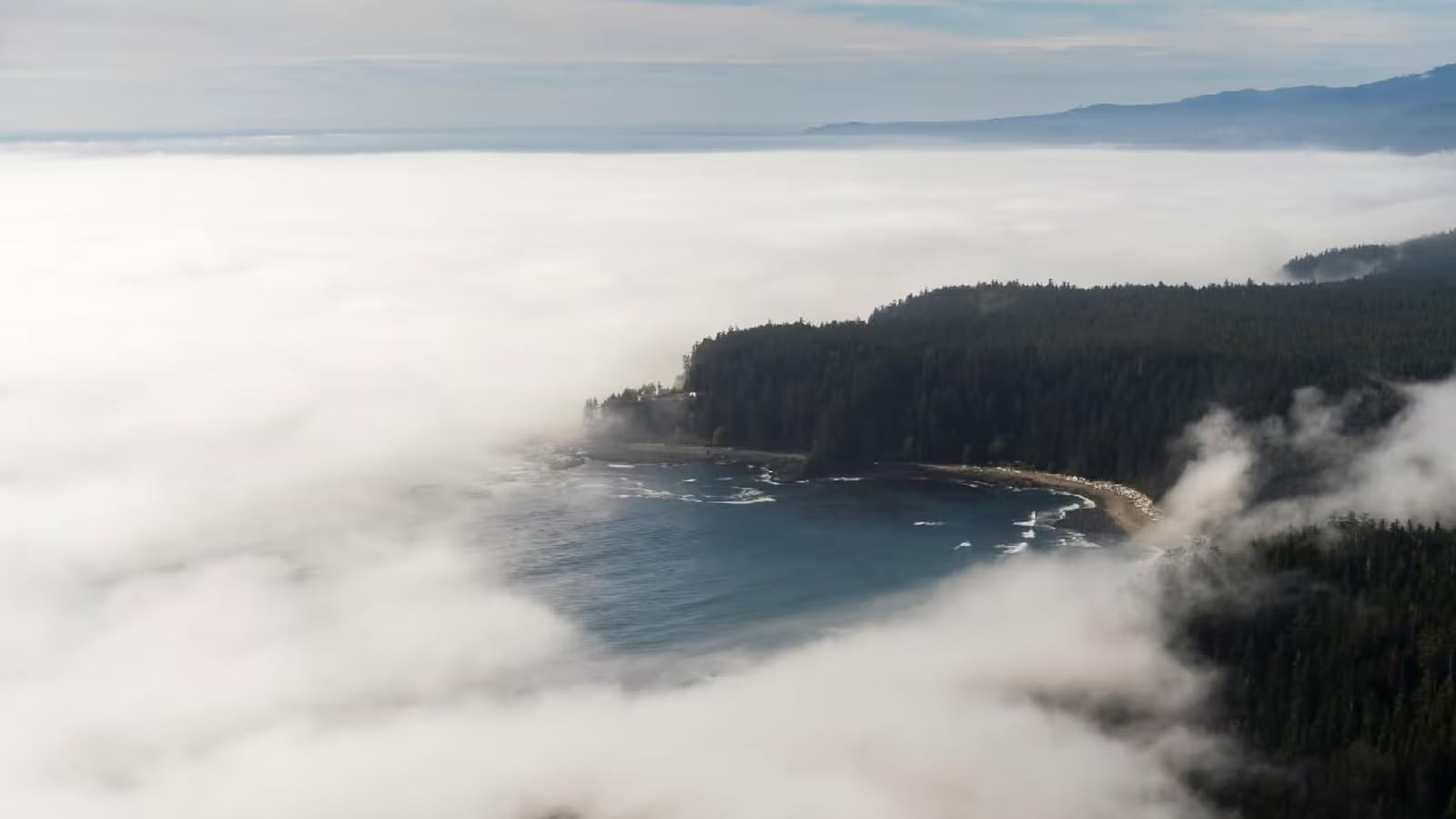
source: CTV photo: Pacific Rim National Park Reserve, Parks Canada