
A rare visit from a mysterious trio of killer whales has sparked excitement among whale researchers and wildlife watchers across the West Coast.
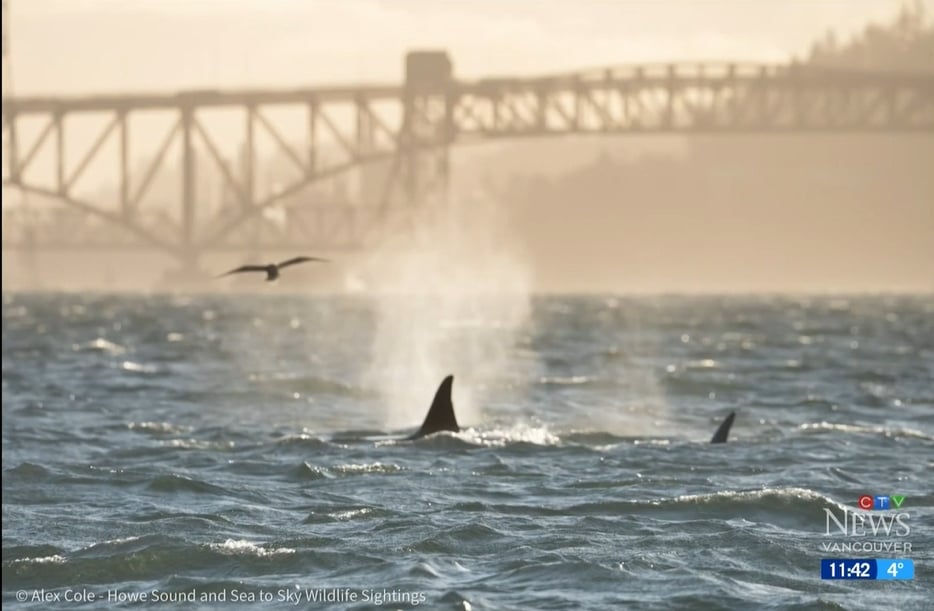
The three orcas were first spotted circling in Vancouver’s Burrard Inlet late last week, capturing the attention of onlookers.
Among them was Alex Cole, who runs the Howe Sound and Sea to Sky Wildlife Sighting Facebook group. He and others posted photos and video of the whales to the page, and those images quickly became a vital resource for researchers.
“They’re pretty magical, mystical, huge, intelligent creatures,” Cole said. He and members of the group continued sharing images as the whales lingered for several days.
The photos helped researchers identify the trio. Bay Cetology whale researcher Jared Towers says the whales had never been seen in Canada before, which marks a significant discovery in more than 50 years of documented whale research in B.C.
“This is the first time that any population of Bigg’s killer whale, other than the West Coast transient population, which spends a lot of time in these waters, has been seen in the Salish Sea,” said Towers.
Why are they here?
Cole’s photos revealed key markings, including distinct scarring believed to be caused by cookie-cutter sharks.
“They’re commonly found on killer whales that are photographed around the Aleutian Islands,” said Towers.
These scars helped researchers recognize the whales as the same trio documented near Anchorage, Alaska, last March.
Why they travelled so far remains a mystery.
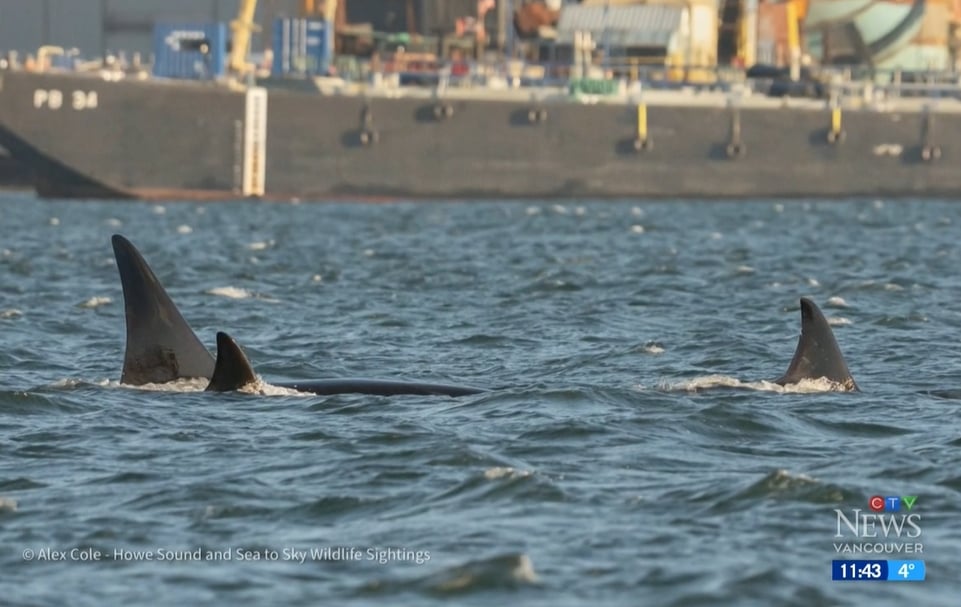
“Why they’re over here in the eastern North Pacific is anybody’s guess,” Towers said.
Scientists say more information is needed to understand what brought them south, whether it is food, climate, or another factor.
The whales spent around four days in Vancouver before they were spotted in the Seattle area on Wednesday.
Researchers will continue tracking the whales as they make their way along the coast. Bay Cetology is also encouraging the public to upload any photos of the trio to finwave.io.
The platform helps scientists track individual whales and build long-term identification records.
Cole says public contributions are a major part of modern whale research.
“Citizen science is massive, and it makes a huge impact. And the resources of thousands of interested people taking photos and observations—it’s enormous.”
The whales have now been officially catalogued as T419, T420 and T421.
source & photo: CTV