
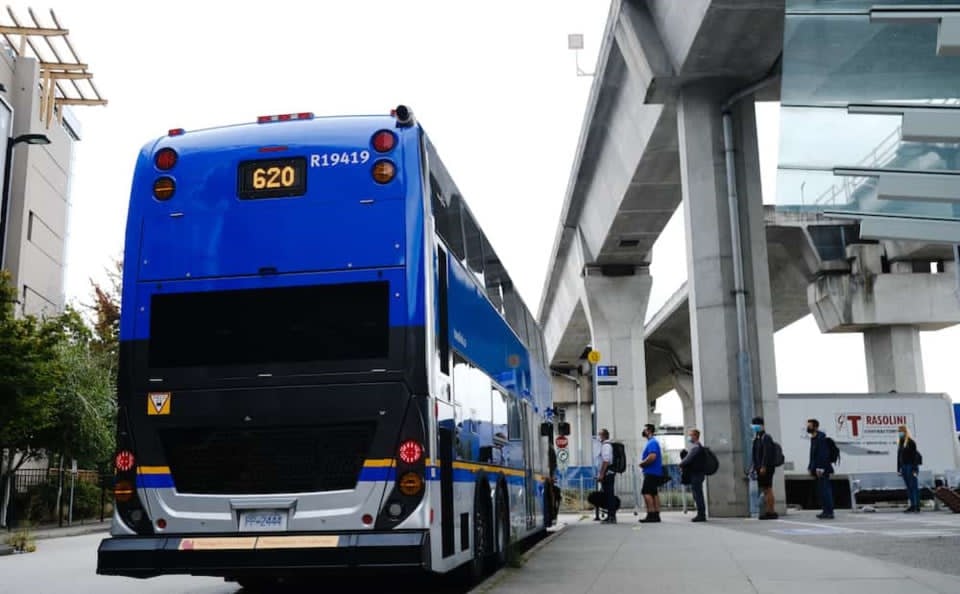

Two local unions represent more than 5,000 transit workers across the region.
Metro Vancouver transit operators are one step closer to taking job action after voting overwhelmingly in favour of strike action.
On Tuesday (May 26), the Unifor local unions representing transit operators voted 99 per cent in favour of strike action toward their employer, Coast Mountain Bus Company (CMBC), according to a press release.
Unifor Local 111 represents transit operators, while Local 2200 represents skilled trades, service and SeaBus workers. Together, the two local unions represent more than 5,000 transit workers across Metro Vancouver, according to a press release.
“A 99 per cent strike mandate is a clear message these workers are together and resolute about the challenges they face,” says Lana Payne, Unifor national president. “They keep Metro Vancouver moving every single day, and they deserve a contract that reflects their value, their skill, and the cost of living in the region. CMBC needs to take this vote seriously.”
The strike mandate covers transit operators, maintenance workers, SeaBus crews, community transit operators and relief/on-call drivers across Metro Vancouver.
●Metro Vancouver bus strike: The previous contract expired
The previous collective agreement expired on March 31, 2026. The local unions began negotiations with their employer on Feb. 2, with “key priorities including cost-of-living pressures, health and safety, and dignity in retirement.”
Unifor says talks broke down after CMBC “refused to withdraw a series of concessions on contracting out, workplace safety, worker dignity and union rights.”
“CMBC has been told exactly where their workers stand,” says Gavin McGarrigle, Unifor western regional director. “Transit workers are not asking for the world. They are asking for a fair contract that keeps pace with the cost of living in one of the most expensive cities in the country. The sooner the employer recognizes that, the sooner we get a deal.”
The joint bargaining committee will be back at the table and is prepared to continue negotiations on Monday, June 1. No strike date has been set.
After securing a strike mandate, the union must also issue a 72-hour notice under the Canada Labour Code.
●Metro Vancouver’s previous transit strikes
Metro Vancouver is a very transit-oriented region with more residents using public transit per capita than many other big cities across North America. This means the road system can’t absorb the number of trips that would overflow if the entire transportation network were offline.
Transit strikes have heavily impacted the day-to-day lives of local residents in the past. Most recently, in 2024, CUPE 4500 — the union representing transit supervisors, including those overseeing bus drivers and mechanics — went on strike, resulting in a complete Metro Vancouver bus service stoppage.
The last time the unions bracing for a possible strike initiated job action was on Nov. 1, 2019, resulting in a 30-day transit dispute with various reductions in service across the transportation network. But the three-day, complete shutdown was narrowly avoided in that case.
For a trip down maybe-not-so-nostalgic-lane, check out what our readers had to say about that impending total shutdown.
We have reached out to Unifor and Coast Mountain Bus Company for further comment.
source: Richmond News photo: TransLink